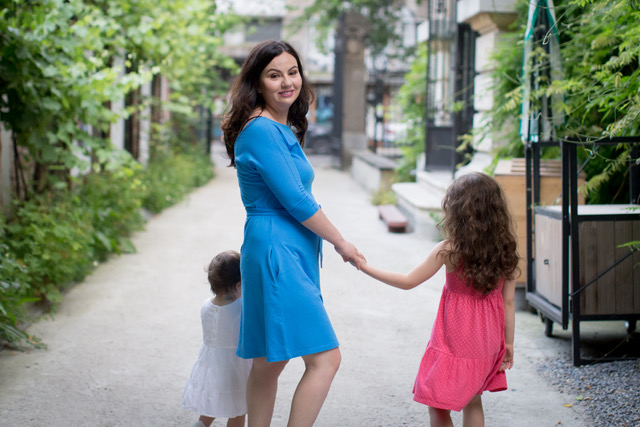
We strive to educate our children about topics like drugs, alcohol, smoking, sex. We teach them to respect others and try to make a positive impact in the world they live in. We teach them that education is valuable and many other things that we believe they need to know in order to become responsible and as happy adults as possible.
But for one reason or another, we often skip lessons about money and personal finances.
No wonder – we, in turn, haven’t learned much about this topic either: neither at home nor at school.
And then we find ourselves living in a world where banks hand out credit cards like candy, we take out personal loans for smart TVs (instead of saving for them), and we generally tend to live beyond our means.
I had to experience some less pleasant things to realize that I knew nothing about how to manage my money and make it work for me and not against me.
With the wisdom I gained in this learning process, I realized how important it is to teach my children as much as possible about money, in their own words, and to help them develop useful skills for their entire lives.
In this article, I have summarized the seven most important financial principles that I want to instill in my children and I hope it inspires you too!
1. Money is not the “evil eye”
One of the most widespread limiting beliefs about money is that “money is the evil eye – it only brings trouble, and those who want to make money are evil and stingy”.
In reality, money has no power on its own – it is just pieces of paper. Its value and power – whether positive or negative – is what we give it.
For example: I may think it is not okay to want to make a lot of money, because that would mean I am a bad person. You may think it is okay to want to make a lot of money because that way you will be able to use some of it to help those in need.
You and I also think about money and making money – it’s just that our way of reporting is different. For me, money is a bad tool, for you, a good one.
Money can make our lives easier and allow us to help those around us. It’s not everything in life, but it’s far from just a “necessary evil”.
2. Money is not free and it doesn’t appear by magic
This may seem like common sense, but for children it’s not at all clear – especially since money is pretty invisible these days (it’s sitting somewhere in a virtual account and we rarely use banknotes and coins in our everyday lives).
I realized this one day in January when my 5-year-old daughter told me she wanted me to order her a doll from Amazon. I explained that she had just received some Christmas presents and that we had no money left in our budget for toys.
She looked at me in confusion and said, “But Mom, you don’t need money, you just go to Amazon, choose the doll, press the button to say you want it and then it comes in the mail! Simple!”
Since then, I have made it a point to talk about how money “appears” in our account and how things work, at every opportunity I have.
3. There’s a big difference between NEEDS and WANTS
Children need to represent to themselves:
– what are the things we need.
– what are the things we just want
– that needs are the ones that have priority when we spend our money.
We did an exercise in this sense, in which we wrote on a sheet of paper (and also drew) the two categories of things: needs (home, food, clothes, education) and wants (eating out, toys, vacations).
Then, with each thing they asked us for, we asked them to think about whether it was a need or a want.
Now they have already become experts on this subject and are even inventive and persuasive when they want something: they come up with creative arguments to justify why we should buy something, even if it is not a need.
NOTE: don’t think that we have eliminated every unnecessary expense! We believe that life should be lived to the fullest and that the little pleasures of life are very important. However, we try to have a fixed amount each month that we allocate to these expenses (a certain percentage of our family budget), because otherwise we can easily spend everything we have in the account (it has happened to us in the past).
4. You Make Money When You Add Value
The two basic rules that my kids know are:
– When you add value in some way to someone else’s life, you get rewarded.
– The more value you add, the bigger your reward.
I know that many parents make a habit of giving their kids a small amount of money when they tidy up their room or take out the trash.
I, for one, believe that these are basic things that every child should learn to do, as their way of contributing to the family and as a good step towards becoming a functional adult who knows how to take care of themselves and their space.
After all, no one pays us when we do laundry or make our beds, right? So why teach our kids otherwise?
What I do is this: we have a list of things that each of them has to do, depending on their age (for example: tidying up, making the bed, putting the washed clothes in the closet). And if they do anything else IN ADDITION to their responsibilities, then I reward them for it.
That is, I create opportunities for children to earn money that correspond to the reality of the world they live in. As a footnote, the content of my blog (about how to build a successful business) also revolves around the same idea.
In this way, my children have learned to be very attentive to how they can help as much as possible – just the other day, my youngest daughter (6 years old) did a general tidying of the bathroom drawers, without anyone asking her. This is because he is in the process of saving for a new toy he wants and has a plan on how to reach the amount he needs.
5. If you want something and can’t afford it right away, you need to save (and be patient until then)
Your children’s first experience with money will be about spending it – they will see you paying for food at the supermarket, a bill at the bakery or supplies for their first day of school.
However, it is also important for them to see that money is not only to be spent, but also to be saved. Otherwise, how will they know that this part exists?
My children have piggy banks in which they save for certain goals.
Obviously, I’m not talking to a 6-year-old about how to save for a car, but I’m using a time horizon that makes sense to her.
For example, I helped her make a piggy bank where she saves for a set of dolls – and I even put a doll sticker on the piggy bank to help her visualize the end goal.
6. It’s important to be generous
For me, money and wealth go hand in hand with being generous. Only then will money reach its true potential to make this world a better place.
We have a few organizations and causes that we support that align with our values and how we want to contribute to a better world.
And it’s important to talk to our kids about WHY we’re doing this and why we chose this organization and not another.
That way, they understand that it’s not something we do just to tick off our calendars that we were generous this year.
In addition to regularly donating clothes, toys, books, and supplies (in the best condition), we have an envelope where we all collect money (yes, the kids contribute from their piggy bank too) that we give away at the end of the year or use to buy various items for those in need.
7. Bigger doesn’t necessarily mean better + money can’t buy everything
Perhaps the most important thing I want for my children is for them to learn to enjoy the little things in life. In my experience, these are what make life truly enjoyable.
So I make sure to show them that a bigger house doesn’t necessarily mean a better house for you – that it also comes with more work to maintain, for example, and that it doesn’t mean you’ll be truly happy in that house just because it’s big and beautiful.
I want them to know that money can’t buy everything: it can’t buy health (at least not always), love, true friendship, or happiness.
And a sense of fulfillment doesn’t come from how much money you have in the bank, but from how you manage to be content with what you have.
Physical things and the size of a bank account will never fill an empty heart.
It is very important to me that my daughters know how to be happy with what they have and not enter a constant race for the next “thing” to buy, to possess.
There is nothing I want more in this world than for my girls to be happy in life. I hope they will strive to become the best version of themselves and I hope they will be wise, generous women who will contribute as much as possible to creating a better world.
I hope that each of them will find that “something” for which they can strive to surpass themselves every day.
And I also hope that, when it really matters, they will remember all our discussions and the advice “from their mother”.
Olivia Angelescu is the mother of two daughters (7 and 12 years old) and an online marketing consultant. Her website is www.lansezonline.com where she writes about how you can start an online business with minimal resources and how you can grow it through smart marketing strategies. In her free time, you can find her in the garden, tending to her basil and rosemary beds, or planting a shrub that will attract more birds and butterflies to the yard.


 ©2025 PSIHOLOGIA BANILOR - All Rights Reserved - Powered by